
R-Rated Religion
Politics • Spirituality/Belief • Culture
RRateReligion exists to better educate faith-based persons and communities to sound biblical doctrine and theology as it relates to politics, cultural issues, and the Church, both local and global.
The goal of this community is to connect and re-enforce believers to biblical truth as it relates to pragmatic strongholds found in our secular society, as well as the fallen world. The content of this community is intended to clarify both Christian and non-Christian positions on controversial topics.
Interested? Want to learn more about the community?

Learn more first
Podcast coming soon.

Look for my new podcast coming soon.

Interested? Want to learn more about the community?

Learn more first
What else you may like…
Videos
Posts
Articles
Why Christians can and ought to vote Trump tomorrow.

The best 5 reasons why a Christian can and ought to vote for Trump in the upcoming election.

00:14:37
Welcome!

Who I am!

00:06:04
post photo preview
Navigating Theological Issues in Politics.
Why Faithful Christians Can and Should Vote for Donald Trump.

Why a Christian Can Vote for Donald Trump with a Guiltfree Conscience.


The candidates are set, the election is upon us and what are we to do? This has been a looming question for most concerned Christians since Donald Trump first came down the escalator that fateful day in June 2015. Can faithful Christians, imbued with the Holy Spirit, regenerate in the ways of the secular world, and held to their religious and moral convictions pull the lever for “orange man bad?” This is what I aim to put to rest in this article. Not only can I make the case that Christians can vote for Donald Trump in the coming election without hesitation…but they ought to.

I noticed that in 2015 and 2016 respectfully, an ongoing debate in the evangelical world began regarding the morality of Trump and evangelicals around the Country. This debate of Trump marriages, dalliances with porn stars, potty-mouth, etc. keeps popping up in faith-based communities around the nation. We know the tropes, we know the sins, and yet we keep debating what to do.

Even today, in 2024, nine years after that notorious escalator ride, we still weigh the options. That needs to end. The problem is everyone is speaking past each other and not thinking theologically. This, I plan to remedy. The issue has become an emotional one, based on secular/religious morality that isn’t relevant. In academic circles, this is a theological apologetic [Apologetics is the discipline that deals with a rational defense of Christian faith. It comes from the Greek word apologia which means to give a reason or defense.[1]] on why Christians should vote for Trump in the coming election.  

I remember a poignant response to this came from one of the best theologians of our generation, Wayne Grudem. He wrote a letter to an old friend and shared it with his church. You can find this on YouTube. His point was to appeal to a conscientious Christian who loved Christ, loved the Church, and struggled with what he perceived as a false, immoral Christian, obtaining the White House. I thought Grudem’s response was kind, thoughtful, and elegant, yet it still missed the point. As Christians, we are tasked to think theologically: “Ultimately the believer must try to think theologically. This involves thinking exegetically (to understand the precise meaning), thinking systematically (to correlate facts thoroughly), thinking critically (to evaluate the priority of the related evidence), and thinking synthetically (to combine and present the teaching as a whole).”[2] This means that above all, our feelings, emotions, proclivities, ideologies, etc., we are asked to see how this lines up with the word of God. What does the Bible instruct us on how to act in these matters? As usual, we theologians have overthought this and made it more complicated than it should be.

Let me make my case.

1.      Politics is Not Sacred

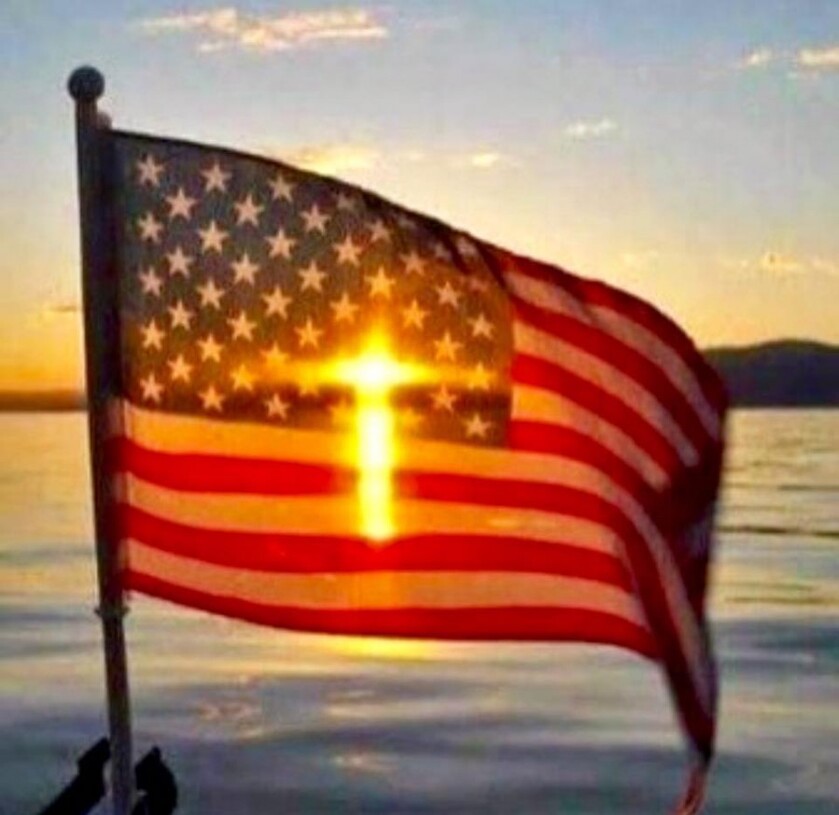
First, Politics is not sacred. This has been forgotten in America, even to conservative Christians. The flag represents the United States of America, its principles and values, and those who died to preserve those principles and values, nothing more. It is not a religious symbol, remember this statement: “You shall not make for yourself a carved image, or any likeness of anything that is in heaven above, or that is in the earth beneath, or that is in the water under the earth. You shall not bow down to them or serve them, for I the Lord your God am a jealous God, visiting the iniquity of the fathers on the children to the third and the fourth generation of those who hate me, but showing steadfast love to thousands of those who love me and keep my commandments.”[3] This goes for everything patriotic too. All too often conservatives fall prey to idol worship, and this goes for the halls of Congress as well.

A couple of years ago I was listening to Geraldo (I know) on the Five lamenting about how pissed he was at Trump for the January 6th riots. He used the term hollowed halls for the degradation of the Capital building. I remember thinking, what is so hallowed about Congress? Currently, Congress has an 81% disapproval rating, if it is hallowed our priorities are misconstrued. Most Americans detest politicians and think the system is rigged (which it is).

Moreover, the Bible is clear on this. The New Testament says very little of politics but to pay taxes (Matthew 22:21) and that God installs leadership in Government (Romans 13:1-7), whether we like it or not. The Old Testament is replete with examples of where Government goes wrong and of the evils of good men allowing ruling power to corrupt and pervade evil (David, Solomon, Rehoboam, and on and on).

What most Christians miss, which is vitally important, is the warning that the Book of Revelation is portending – do not trust governments! They will rise and fall on the evils of mankind and only Christ, at His second coming, will put things right. I do not mean to be dismissive of the intricacies of this powerful book but why everyone is stuck in the micro of Revelation (which is needed for good exegesis), they miss out on the Macro message. Revelation warns us of worshiping government and putting too much stock in sinful rulers of the secular age.[4]  

2.      Christians Do Not Worship Man

This should be obvious but unfortunately, with the advent of Trump, even right-wing conservatives are falling into his cult of personality. The left worships its politicians. Just look at Obama with the media and celebrities (YouTube Colbert interviewing Obama – “I want to take a moment and drink you in” - it is gross). Now they are trying to do the same with Kamala. Look at how Hollywood celebrities fawn over each other and shower themselves with awards and accolades. It has gotten so egregious that this author, a film student and admiring of all things film, can no longer watch anything award shows or talk shows that showcase democrat politicians, media celebrities, or Hollywood stars. The amount of idolatry and man-worship on display is enough to make Babylon, Ancient Greece, and the Empire of Roman blush in modesty.

Christians understand the nature of man and the history of Idol worship. The left holds up politicians as their gods, along with their demi-gods (celebrities in the media and Hollywood), this much is clear, and we should not emulate this in any form (Colossians 3:5).

Christians understand the nature of mankind (Psalm 51:5), that all mankind sin and fall short of the glory of God (1 John 1:8). Donald Trump is a sinner, no different from you or me, and should be considered a sinner before God like all others. Whether Trump wears his sins on his sleeve or hides his sins and runs from them (i.e. Joe Biden, Hunter Biden, Kamala Harris, Mitch McConnell, etc.) should be taken into context; “for all have sinned and fall short of the glory of God.”[5]   

Carping about the persnickety sins of Trump over all other politicians is an act of futility, bias, and hypocrisy. What Christians should be concerned with are legal issues that prevent or preclude Trump from office, and that discussion is alive and well in society, as well as, being adjudicated in the court system. We (Christians) do not worship man, we understand that all men are flawed and that includes our politicians, especially our politicians.  

3.      Religious Persecution

Thirdly, religious persecution is the Christian way and we have been very lucky up until now. This might be the most important reason not to vote Kamala - Walz in the coming election. Moreover, this is also the hardest thing for good, God-fearing Democrats to come to grips with – the Democrat party is hostile to Judeo-Christian religion, ethics, and values.[6] If you care about past, present, and future religious persecution and discrimination, Trump–Vance is where you have to go. Long gone are the days of Jimmy Carter or JFK interjecting their faith and reason with political positions. The Democrat party is no safe space for Christian belief.

David Horowitz wrote about the hostility toward Christians from Democrats in a great book called Dark Agenda: The War to Destroy Christian America. This is a wonderful and fact-full book on how the left has declared war on Christianity. He goes into detail on just how hostile the Obama administration was toward Christians, Churches, and para-church organizations. I, too, have written recently on the attempts that the Biden administration has taken to stifle religion in America.

Everyone saw the inimical actions of local, state, and federal governments had toward Churches during the pandemic, jailing pastors, closing down Church services, and preventing end-of-life care by chaplains or pastors from ministering to the sick and/or dying. Did you think liquor stores are essential, but Churches are not?

How about web designers and bakers being persecuted for their religious convictions? Democrat administration has deemed planned parenthood as sacred spaces needing government protection, but pro-life centers are being vandalized with no consequence. Pro-life activists are being torn from their homes and prosecuted by Democrat prosecutors for merely praying to abortion clinics or defending their cohorts from leftist violence.

I could write an entire article on how the family is under attack from Democrat politicians, including Tim Walz, who thinks gender-affirming is paramount to parental authority. Not to mention the physical harm Democrats are doing to young pre-pubescent girls and boys with gender dysphoria. God does not make mistakes in creation; He has declared it so: “When God created man, he made him in the likeness of God. Male and female he created them, and he blessed them and named them Man when they were created.”[7]

The Democrat Party has amalgamated itself into a civil religion; “French Enlightenment philosopher Jean Jacques Rousseau first coined the term ‘civil religion’ in his Social Contract (1762). Rousseau criticized traditional religion for advancing dogmas that he believed led to ignorance, intolerance, and arbitrary limits on personal liberty.”[8] The words ignorance, intolerance, and limits on personal liberty seem to be in every Democrat politician's speech in the last ten years; after all, Biden did save democracy from the intolerant and ignorant when he stepped aside to pave the road for Kamala as we are told daily. I am sure it had nothing to do with the utter lack of cogency he displayed each day.

Believe it or not, there still are pro-life Democrats in America today. According to Gallup, as of 2024, about 12% of Democrats self-identify with the pro-life position. The only problem is that the party does not support them. During the 2020 primary in a town hall, a pro-life woman (Kristen Day) asked Pete Buttigieg if pro-life voices still have a place in the Democrat party. This is what she wrote: “He refused — twice — to even answer that part of my question and instead focused on his unyielding support for abortion and did not really seem to want the vote from me or people who share my views.” This is the harsh reality of where the Democrat party is today.

4.      God’s Sometimes Picks Shaddy Characters

I know this sounds blasphemous but hear me out. So far, I have been making purely theological reasons why Christians should vote for Trump-Vance in the coming election. I have tried to stay away from the emotional tug at the heartstrings that so many do in favor or against. However, many Christians might still be on the fence because of Tweets or temperament, and just plain disdain for “orange man bad.” Let me make one last effort to prove to you that if you believe in God’s sovereign hand in the world, and you love Christ and have a passion for Christ’s church, you might be surprised at how God can choose flawed men to change the fate of religious faith in the world. Let me give two examples.

First, let us look at the Old Testament. When Israel was exiled to Babylon, who freed them to return to their homeland? It was not a Jewish Messiah or great warrior, it was a pagan king; “Cyrus II, also known as “Cyrus the Great,” was king of Persia, circa 559–529 bc. Cyrus became lord of Judah when he conquered Babylon.”[9] This freed the Israelites to return home a rebuild. Cyrus’s famous proclamation can be found in the book of Ezra:

“Thus says Cyrus king of Persia: The Lord, the God of heaven, has given me all the kingdoms of the earth, and he has charged me to build him a house at Jerusalem, which is in Judah. Whoever is among you of all his people, may his God be with him, and let him go up to Jerusalem, which is in Judah, and rebuild the house of the Lord, the God of Israel—he is the God who is in Jerusalem.  And let each survivor, in whatever place he sojourns, be assisted by the men of his place with silver and gold, with goods and with beasts, besides freewill offerings for the house of God that is in Jerusalem.” [10]

God works His glory by whatever means He wishes, sometimes it is through Saints, as in Abraham or Moses, and sometimes it is through pagan kings such as Cyrus. This also happened to Christendom in the fourth century with the Emperor Constantine, also known as “Constantine the Great.”

 In 306, after Constantius's death, Constantine was proclaimed Emperor in York. He became the senior ruler of the empire in 312 after defeating his rival Maxentius at the Milvian Bridge. According to Lactantius, Constantine received instructions in a dream the night before the battle, leading him to fight under the sign of the Cross, which was later modified into the Labarum standard. He credited his victory to the Christian God, and soon after, Christianity was tolerated and received imperial favor. In 313, he reached an agreement with his fellow-emperor Licinius to enact a policy of religious freedom, known as the Edict of Milan.[11]

There is much debate on when or if Constantine actually became a Christian or just realized the benefits of Christianity as a national religion, but that is beside the point. A deeply flawed pagan man stopped religious persecution and changed the trajectory of Christianity in the West forever. Once again, God saved the Christian faith and let the Gospel spread throughout the world by using a deeply sinful human being. God’s glory wins every time, and by whatever means He chooses to do so.

The point is, that God can be using Trump to the right the ship, and Trump's speech, attitude, crude nature, and debaucherous past do not matter. Only the glory of God matters. God could use Biden or even Kamala, but that fruit has yet to ripen. I have seen Trump brag about the Supreme Court and the overturning of Roe. This was a great thing, but Trump had very little to do with it. A devout Christian would have recognized God’s work in that landmark decision. Trump had nothing to do with the passing of RBG (1 Samuel 2:6) which paved the way for a more conservative court. Despite Trump's protestations, he did not overturn Roe Vs. Wade, God did.

 Allow me to conclude with something personal. I am not a huge fan of Trump; I only worship the Triune God. I didn't vote for Trump in 2016. I have been following Donald J. Trump's life and career since I was in junior high. "The Art of the Deal" was one of the first adult books I read; I read it when I was 11. I knew about Trump's tendency to ruin good things; I saw the airline debacle and the USFL, and everyone witnessed the disaster that was Trump University. I figured he would get into the White House, make some jokes, and burn it to the ground, all along claiming to be the best. I was wrong! He governed conservatively, protected religious freedom, protected our borders (which is a biblical value), and kept the United States out of wars. What more can a Christian ask for in a secular world?

In 2020, I enthusiastically voted for Trump because I was not a Christian in 2016, but I became one in 2017. When I became a Christian, it felt like a veil was lifted and the scales fell off my eyes. I was able to see the truth that had been hidden in a world of deception. I realized that the right choice theologically was to oppose religious hostility, and I believed that only one side was committed to doing that. My decision to vote for Trump was influenced by my Christian conviction, my aversion to politics, my dislike of celebrity worship, my belief that the Democratic party espouses an evil platform, and my understanding that God uses flawed individuals to glorify Himself, not to glorify men.

You might be wondering why I have not addressed the elephant in the room – is Donald Trump a Christian? I did not cover the issue because it does not matter. This is a binary choice, one side supports and promotes evil, and the other fights against it. Which side are you on?

Footnotes:

[1] Norman L. Geisler, “Apologetics, Need For,” Baker Encyclopedia of Christian Apologetics, Baker Reference Library (Grand Rapids, MI: Baker Books, 1999), 37.

[2] Charles Caldwell Ryrie, Basic Theology: A Popular Systematic Guide to Understanding Biblical Truth (Chicago, IL: Moody Press, 1999), 19.

[3] The Holy Bible: English Standard Version (Wheaton, IL: Crossway Bibles, 2016), Ex 20:4–6.

[4] I could make a long and hard case that Politics is, in essence and theologically, an evil endeavor and that most men and women who seek it, do so for nefarious reasons and should never be looked upon as examples of heroism, exemplary, or reverence. However, in this treatise, it would be too long.

[5] The Holy Bible: English Standard Version (Wheaton, IL: Crossway Bibles, 2016), Ro 3:23.

[6] I could make a cogent apologetic argument for why the Democrat Party no longer is a safe space for Christians and Biblical doctrine but, once again, that would be too large in scale for this article. Suffice it to say, there are problematic reasons for individuals to claim both a true Christian faith and allegiance to the Democrat Party.

[7] The Holy Bible: English Standard Version (Wheaton, IL: Crossway Bibles, 2016), Ge 5:1–2.

[8] Arthur Remillard, “Civil Religion: History, Beliefs, Practices,” in Handbook of Religion: A Christian Engagement with Traditions, Teachings, and Practices, ed. Terry C. Muck, Harold A. Netland, and Gerald R. McDermott (Grand Rapids, MI: Baker Academic, 2014), 643.

[9] Jason M. Silverman, “Cyrus II,” ed. John D. Barry et al., The Lexham Bible Dictionary (Bellingham, WA: Lexham Press, 2016).

[10] The Holy Bible: English Standard Version (Wheaton, IL: Crossway Bibles, 2016), Ezr 1:2–4.

[11] F. L. Cross and Elizabeth A. Livingstone, eds., The Oxford Dictionary of the Christian Church (Oxford;  New York: Oxford University Press, 2005), 408.
Read full Article
post photo preview
Election have Consequences
real world fallout

The phrase “elections have consequences” is bandied about in the media and in political dialogues more robustly over the past couple of years or so. It typically means whatever the person dropping it wants it to mean. For the conservatives, it means that Trump is out, and the progressive left agenda now pervades. For the left, it means women will be forced to back-alley abortions and black people will be forced into Jim Crowe all over again by the racist-misogynistic Republicans. The term has become a political football launched by whoever controls the narrative. For the Christian, it means something so much more.

True Christianity accepts the total and universal sovereignty of God; “this is the interpretation, O king: It is a decree of the Most-High, which has come upon my lord the king, that you shall be driven from among men, and your dwelling shall be with the beasts of the field. You shall be made to eat grass like an ox, and you shall be wet with the dew of heaven, and seven periods of time shall pass over you, till you know that the Most High rules the kingdom of men and gives it to whom he will” (Daniel 4:24-25).[1] For many, this is difficult to comprehend, especially in light of theodicy, but that is a topic for another article. The Bible is very clear that God, not man, is truly sovereign over creation (Exodus 3:14), election (Roman 9:6-13), and destruction (Psalm 39:4). Therefore, our liberty, freedom, and sovereignty in national elections are never far from, and overriding of, God’s divine will and purpose. Where elections go – God ordains. Therefore, the consequence of each election process is the working of the Almighty in the hands of His creation: the people and leadership of the nations.

Today the United States of America is infected with a political theology:

A theological method of contextualization* that relates religion to the political situation of the society in which it exists. While it may recognize the importance of personal reception of grace and a personal relationship with God, it refuses to see the great themes of the gospel solely or chiefly in terms of individual salvation. It holds that those themes—peace, justice, reconciliation, freedom, etc.—must be seen in a social setting.[2]

It permeates the halls of Congress, saturates our discussions, and points to the glorification of humanity in its pursuit of perfection. This is a perfection that God-fearing Christians know humanity is incapable of. This ideology birthed the belief of “civil religion” in the mid-eighteen century:

French Enlightenment philosopher Jean Jacques Rousseau first coined the term “civil religion” in his Social Contract (1762). Rousseau criticized traditional religion for advancing dogmas that he believed led to ignorance, intolerance, and arbitrary limits on personal liberty. He did not advocate abandoning religion, though. Instead, Rousseau proposed that a civil religion—grounded in a minimal set of “positive dogmas,” such as freedom and liberty—could unify society and provide it with a moral grounding.[3]

Civil religion took root in Europe and fueled multiple revolutions that resulted in the needless deaths of thousands. It was under the guise of civil religion that many in American evangelicalism took on this cloak of morality to establish theocratic rule in the early settlements of New England.

“America’s civil religion originated from both Puritan and Enlightenment sources. In “A Model of Christian Charity” (1630), John Winthrop, the first governor of the Massachusetts Bay Colony, imagined that Puritans shared a special covenant with God. He pledged to protect this covenant by enforcing biblical codes of belief and behavior, making the community a “city upon a hill” for the entire world to emulate. In coming generations, American civil religion would absorb Winthrop’s sentiments of national destiny and divine purpose. Winthrop’s words themselves have often been recited. In 1989, President Ronald Reagan referenced the “shining city upon a hill” during his farewell address to the nation.[4]

Although some good has been accomplished under the banner of civil religion, it has now been hijacked by the progressive left and political theologians of liberalism and now uses it to establish a secular theocracy in the White House and Congress, all backed by the secular dogmas of the Supreme Court edicts. There can be no promising end to this without the hand of God. That hand is in our sovereignty duty to vote when the time arises. Today happens to be one of those days.

The beginning of the twenty-first century has spawned some of the greatest attacks on the Christian community this country has ever seen. The Obama administration was hostile toward communities of faith and Biden seems to agree. We, as members of the Christian politic, owe it to our families, communities, and loved ones to avail ourselves of the voting process and cast our ballots where good theology permits. Christians vote their conscience, based on sound biblical doctrine, not popularity contests. We do not cast votes for who has the highest probability to win but who is the best candidate to protect religious freedom. That freedom affords us the ability to spread the truth of the Gospel of Jesus Christ to the nations.

Elections do have consequences, but those consequences are not outside of the reach of God’s sovereignty. All Christians living in America should be grateful and honored to live in such a free country as this. In due course of this appreciation is the responsibility and duty to vote in as many elections as one can. Today is a primary election, and these elections matter. Take the time today to give thanks to God for your ability to vote and do so!

For an Election:

Almighty God, to whom we must account for all our powers and privileges: Guide and direct, we humbly pray, the minds of all those who are called to elect fit persons to serve in political leadership. Grant that in the exercise of our choice we may promote your glory, and the welfare of this nation. This we ask for the sake of our Lord and Savior Jesus Christ. Amen.


[1] The Holy Bible: English Standard Version (Wheaton, IL: Crossway Bibles, 2016), Da 4:24–25.

[2] Alan Cairns, Dictionary of Theological Terms (Belfast; Greenville, SC: Ambassador Emerald International, 2002), 332.

[3] Arthur Remillard, “Civil Religion: History, Beliefs, Practices,” in Handbook of Religion: A Christian Engagement with Traditions, Teachings, and Practices, ed. Terry C. Muck, Harold A. Netland, and Gerald R. McDermott (Grand Rapids, MI: Baker Academic, 2014), 643.

[4] Arthur Remillard, “Civil Religion: History, Beliefs, Practices,” in Handbook of Religion: A Christian Engagement with Traditions, Teachings, and Practices, ed. Terry C. Muck, Harold A. Netland, and Gerald R. McDermott (Grand Rapids, MI: Baker Academic, 2014), 643–644.

Read full Article
post photo preview
Ecclesiastical Misfeasance amid COVID - 19
The Church Got it Wrong

The global coronavirus pandemic is touching all walks of life and each nation with its unique ferocity and consequences. People are getting sick and many are dying. This has struck an equal epidemic of fear and vulnerability into the lives of everyday Americans. In times of great crisis, historically, people of faith turn toward God and the church. But where is the church at present? Most doors are closed, and their leadership is hastily sprinting toward YouTube and online prominence. This is certainly what leaders in Hollywood and the government want from them; but is this biblical? Do we, as Christians have a history of following in lockstep to the whims and panics of the world? Where is our biblical theology in all of this? It seems to be amiss. This article will no doubt land controversial, but it is time to take a stand and hold church leadership responsible for its lack of faith in such a time where it is needed the most. I ask that you read with an open heart and mind toward knowing God and faith in His sovereign presence as you read these words and look toward why the majority of the United States clergy and church leadership failed their flock amid the COVID-19 pandemic.

The great theologian J.I. Packer wrote, “Those who know God show great boldness for God.” I ask, where is the great boldness in the church today in response to the coronavirus pandemic? Where is church leadership in fighting back against a tyrannical government that would close the doors of sanctuary? Who is fighting for the church? Why did leadership so quickly close worship services, cow-tow to the obvious suspension of the separation of church and state, and redefine what church is with an online substitution? What used to be ecclesiastical boldness has retreated due to the group-think mentality through bandwidth via virtual programming. Live-streaming church services are being heralded as the equivalent of the church with clichés such as “the church is not just a building” or “the church is more than brick and mortar.” The rise in church marketing, live streaming services, and the online commercialization of the church just struck black gold and the online presence of promoting Jesus and Christianity is an oil geyser. All it took was a virus from China, sold in fear to the Christian population in America, and every church slammed its doors shut, rushed to the computer, and now sits at the behest of social media outlets that would pull their content and police their speech in a millisecond once that service or sermon veered toward biblical truth. Bible studies and small group meetings were quickly replaced with interim public relations elders and computer media geeks who are fervently attempting to hold an online presence and market their brand of Jesus Christ.

What is perplexing is that non-biblical excuses are being promulgated by leadership but very few laymen and parishioners are soaking it in with any skepticism. Heartfelt social media posts reign with joyous platitudes of herd-like thankfulness. As if the coronavirus was side-stepped by the church via an online authority, instead of realizing that the coronavirus diminished the church and showed the leadership’s lack of boldness in a time of great trial. How bold is it to look into a camera and preach a sermon? Multi-millionaire televangelists and entertainment YouTubers do this every day. Boldness is action in opposition. Why haven’t Christians called out this misfeasance during such a pandemic? Could it be that the American Christian experience no longer knows God? J. I. Packer concludes: “It is simply that those who know their God are sensitive to situations in which God’s truth and honor are being directly or tacitly jeopardized, and rather than let the matter go by default will force the issue on men’s attention and seek thereby to compel change of heart about it – even at personal risk” (Knowing God, 28). This is our task today.

It is vitally important that we begin with a distinction. Words and their definitions matter. Malfeasance is “the performance by a public official of an act that is legally unjustified, harmful, or contrary to law; wrongdoing (used especially of an act in violation of a public trust)”. In comparison, misfeasance is the “wrongful performance of a normally lawful act, the wrongful and injurious exercise of lawful authority”. There is a difference, one is lawful and the other is not. I agree that most clergy truly felt justified, civil obedient, and acted with good intentions (we know about that road paved with good intentions). The questions that are on the table are whether it was theologically justifiable, obedient to the will and purpose of God, and in good faith. We must be clear on the thesis that is being advocated here: The majority of clergy and church leadership in America are negligent in their knee-jerk reaction to COVID-19, in lieu of sound biblical doctrine and precedent, and therefore are culpable of misfeasance toward its flock. This is the official stand of this author.

We must first essentially define what the church is. No doubt there are some truths to the aforementioned platitudes. The church is much more than walls, pews, bibles, and doors. But to regale this online supplementation is a crass and cowardly excuse for not standing up to the world. Ecclesiology (study of the church) is too vast and complex to tackle here but suffice it to say, these online substitutions are far from the biblical church of the New Testament. Jesus Christ spoke of the church in only two roles: the local church and the universality of the saints. That is, the church is local and personal and the body of the church is the makeup of all the people globally who ascribe to salvation through faith in Christ and recognize his work at the cross for our salvation. These are two very simple functions and definitions of what the church should (and has for thousands of years) look and act like. We are all brothers and sisters in Christ, and we get together, in person, to know and worship God. Short and sweet. The argument for/against global ministries and multi-campus church facilities will be set aside for another time.

So, what happened? Simply put, when faced with national fear and threats from the government, most church leadership choose the world and not the word. Like dominoes of groupthink, church after church began to shut its doors, cancel services, and prevent people from coming together to worship God. While liquor stores and hemp shops remained open, churches shut down. For example, in the state of Ohio “shelter in place” ordinances excluded church organizations, but they shut down anyway. The first was the Catholic Diocese of Cleveland. Think of the implications of that: churches deemed themselves not essential! Where most could have taken necessary precautions and social distance protocols, held more services, or forged a way; they shut their doors. Out of fear of reprisal of society and bad press, they bowed willingly to societal stresses. Society and cultural axioms, out of fear and panic, pressured most local churches to lockdown, go away, and fade into obscurity online. And this all took place in a matter of weeks with very little, if no pushback. What a sad time; however, no outrage was touted. Most clergies did this willingly and even spoke out against other churches for meetings. Imagine the thought of first and second-century Christian martyrs looking upon this. While they were being hunted down, slaughtered, and sacrificed to live animals for congregating; two thousand years later leaders of the same church are castigating other Christians for doing the same under much less severe consequences.

Why? Why was the knee-jerk reaction of all denominations and clergy so quick to close its doors and suspend services? This hardly sounds like a universal church of the saints with faith in the Sovereign God of the biblical text. The answer is not hard to understand but the root of it is. What caused leadership so quickly to retreat and abandon the church is fear. Fear of death, fear of the bad press, fear of upset congregants, fear of denominational authority. That fear is from a theological absence of knowing who God is. God is sovereign, God is in control, God is here, and God wants his followers to know Him, worship Him, and fellowship with one another. This is as clear in the Old Testament: “Remember this and stand firm, recall it to mind, you transgressors, remember the former things of old; for I am God, and there is no other; I am God, and there is none like me, declaring the end from the beginning and from ancient times things not yet done, saying, ‘My counsel shall stand, and I will accomplish all my purpose, ‘calling a bird of prey from the east, the man of my counsel from a far country. I have spoken, and I will bring it to pass; I have purposed, and I will do it” (Isaiah 46:8-11 ESV); as it is in the New Testament: “ For from him and through him and to him are all things. To him be glory forever. Amen” (Romans 11:36 ESV).

The Bible is riddled with passages about coming together, in person, with each other for worship, communion, fellowship, rebuke, etc. Here are just a few examples: Acts 2:40-47; 20:7-8; Hebrews 10:25; 1 Timothy 4:13; 1 Corinthians 14:26; just to name a few. The whole of the Old Testament is full of narratives where God’s chosen people come together, in the middle of crisis and trauma, to worship and know him; the book of Genesis is a great starting point. Yet, current clergy spinsters misconstrue and twist scripture to convince us that this fear and separation is not only normal but theological. One common scripture being bandied about is Matthew 18:20; “For where two or three are gathered in my name, there am I among them.” I see this often as an excuse from meeting online as if online meetings are equivalent to in-home personal group meetings. Read the whole chapter in context. When we close the church down it is from fear. Fear that God is not in control and fear that the government dictates how we know and follow our God. Notice Matthew does not say where two or three are gathered out of fear in my name, there am I among them. Online congregating is not the same game as person-to-person fellowship. The same trust, vulnerability, and intimacy are not even in the ballpark. Using scripture to excuse ourselves from being bold in our faith is dangerous, cowardly, and anti-theological.

This may seem harsh but look at the early church and the persecution they endured. They met and continued to meet even under the consequence of torture and death. With the rise of Nero in AD 45 came about horrific persecution of Christians that lasted for centuries. They were hunted down, ripped from homes, massacred, crucified, and much more. Yet they still met, worshiped, fellowshipped, and served one another. The church continued to be the church because early Christians knew that God was present, even in their suffering (1 Peter 3:17). The book of Daniel is a perfect study to illuminate these principles. We do not forfeit our Christian prerogatives because society says it might be bad for culture if we congregate to worship. When those who love evil and hate the church come after true Christians (eschatology) where will the leadership be then? If a virus that is looking to be much less deadly than expected can force the church to self-close what is to become of the church when real panic arises. The implications of this cannot be overstated. Fear and government do not rule our faith. Faith is so much more valuable to the biblical Christian than life, after all: “So we are always of good courage. We know that while we are at home in the body we are away from the Lord, for we walk by faith, not by sight.  Yes, we are of good courage, and we would rather be away from the body and at home with the Lord. So, whether we are at home or away, we make it our aim to please him.  For we must all appear before the judgment seat of Christ, so that each one may receive what is due for what he has done in the body, whether good or evil” (2 Corinthians 5:6-10 ESV).

In the Book of Acts, the leadership and governmental authorities came to the apostles and asked them not to teach in the name of Jesus. Their response: “We must obey God rather than men” (Acts 5:29 ESV). This was bold! Where is that boldness today? I am not advocating anything other than civil disobedience. In most cases, the shelter-in-place ordinances excluded church entities. In those cases, it would not even be civil disobedience but a departure from misfeasance. I ask that we open up our Churches again, this is theological madness! People are hurting, souls are lost, and church doors are closed, mostly due to leadership not taking courageous steps to defend the faith and Sheppard the sheep. No one is sounding a call to arms but a call to what God requires of us: to stand strong in our faith (1 Cor. 6:13), trusting that God is in control (Psalm 24:1-2) and His purpose is being fulfilled (Col. 1:16-17), knowing that we have a much higher reward in death than in life (John 11:25-26). After all fear of God, not COVID-19, allows us to present ourselves as a living sacrifice, holy and acceptable to God, which is our spiritual worship. That we do not be conformed to this world, but be transformed by the renewal of our mind, that by testing us we may discern what is the will of God, what is good and acceptable and perfect (Romans 12:1-2).

To Please God Rather Than Men (Anglican Book of Common Prayer, 669):

Our God, in whom we trust: Strengthen us not to regard overmuch who is us or who is against us, but to see to it that we are with you in everything we do. Amen.

Read full Article
Available on mobile and TV devices
google store google store app store app store
google store google store app tv store app tv store amazon store amazon store roku store roku store
Powered by Locals